
Chess
Play chess in your browser against the computer or with a friend on the same device. Free, with no sign-up and no downloads.
Chess rules
Chess is played on a board of 8 × 8 squares. Each player has 16 pieces: a king, a queen, two rooks, two bishops, two knights and eight pawns. White moves first, and the players take turns moving one piece at a time.
The goal
The goal is to checkmate the opponent’s king. A king is checkmated when it is under attack, which is called check, and no move can save it. The king is never captured.
How the pieces move
You capture a piece by moving your own piece to its square. Only the knight can jump over other pieces.
- The king moves one square in any direction.
- The queen moves any number of squares horizontally, vertically or diagonally, as long as the path is clear.
- The rook moves horizontally or vertically as far as the path is clear.
- The bishop moves diagonally. Each bishop stays on squares of one colour for the whole game.
- The knight jumps in an L shape: two squares in one direction and one square to the side.
- The pawn moves one square forward, or two on its first move. It captures diagonally forward.
Special moves
- Castling: the king moves two squares towards a rook, and the rook jumps over it to the next square. Neither piece may have moved before, and there must be no pieces between them. The king may not be in check, pass through an attacked square or end up in check.
- En passant: when a pawn moves two squares from its starting square and lands next to an opposing pawn, that pawn may capture it on the very next move as if it had moved only one square.
- Promotion: a pawn that reaches the far end of the board becomes a queen, rook, bishop or knight. Most players choose a queen.
Check, checkmate and stalemate
A king under attack is in check, and the check must be answered at once: move the king, capture the attacking piece or put a piece in between. You may never make a move that leaves your own king in check.
If there is no way out of check, the game ends in checkmate. If the player to move has no legal moves but the king is not in check, it is stalemate and the game is a draw.
Draws
The game is a draw in any of these cases. On this page the game detects them automatically.
- Stalemate.
- The same position occurs three times with the same player to move.
- No piece has been captured and no pawn moved in the last 50 moves.
- Neither side has enough pieces to checkmate, for example only the two kings, or king and bishop against king.
- In a two-player game, the players agree to a draw.
Computer levels
The computer opponent has six levels. Even the weakest levels play sensibly and do not give away pieces for free, but they see less far ahead and make human-like mistakes.
- Beginner looks only one move ahead and often misses chances.
- Casual sees direct threats but often misses forks and pins.
- Club player calculates a few moves ahead and usually takes a loose piece at once.
- Advanced calculates deeper and rarely makes mistakes.
- Strong searches for the best move at full strength, but thinks for a shorter time than the master.
- Master is the strongest level and thinks for up to about two seconds per move.
How to play on this page
- In a new game, choose the computer or a second player on the same device as your opponent. Against the computer you also choose the level and your colour.
- Tap a piece and then a target square, or drag the piece. Legal squares are shown as dots on the board.
- Undo takes back a move. Against the computer it takes back both your move and the computer’s reply.
- Hint shows the move the computer thinks is best.
- You can flip the board and copy the game in PGN format, for example into a chess program.
- An unfinished game is saved in your browser, so you can continue later on the same device.
Frequently asked questions
Is this chess game free?
Yes. You can play for free as much as you like, and no sign-up is needed.
Can I play chess against the computer?
Yes. The computer has six levels from beginner to master, so both new and experienced players find a suitable opponent.
Can I play with a friend?
Yes, on the same device. Choose Two players in a new game and take turns. The board can also turn for each player.
How do I castle?
Move the king two squares towards the rook, and the rook moves to the other side of the king. Castling is shown as a legal move only when its conditions are met.
Does it work on a phone?
Yes. The board fits the screen, and you move pieces by tapping or dragging.
Is an unfinished game kept?
Yes, in the same browser. The game and your statistics are stored only on your device.
More games
 SolitaireKlondike Solitaire with Draw 1 or Draw 3. Hints, undo and your game saved in the browser. Free.
 Spider SolitaireSpider Solitaire with two decks and ten columns. Choose 1, 2 or 4 suits and play for free.
 Mahjong SolitaireClassic 144-tile mahjong solitaire. Play free in your browser, with no sign-up.
 SudokuFree sudoku with four levels and a daily puzzle. Notes, hints and progress saved in your browser.
 Snake GameThe classic snake game in your browser: eat apples and grow the snake. Three modes, three speeds, free.
 MinesweeperMinesweeper with three levels and custom sizes. No-guess boards can always be solved by logic.
 FreeCellFreeCell with four free cells. Every card face up and, by default, only solvable deals. Free to play.
 Word SearchFind the words in the letter grid. Three difficulty levels, four grid sizes and a daily puzzle.
 Untangle GameA rope puzzle with 150 levels: drag the pegs until no rope crosses another. Play free in your browser.
 Bubble GameA bubble shooter in your browser: aim, shoot and pop bubbles of the same colour. Levels and endless mode, free.
 Pyramid SolitaireClear a 28-card pyramid with pairs that add up to 13. Solvable deals, hints and undo. Free to play.
 TriPeaks SolitaireClear three peaks with cards one rank higher or lower. Long runs score more points. Solvable deals. Free.
More from HD SofT
We also make apps for phones, TVs and computers.
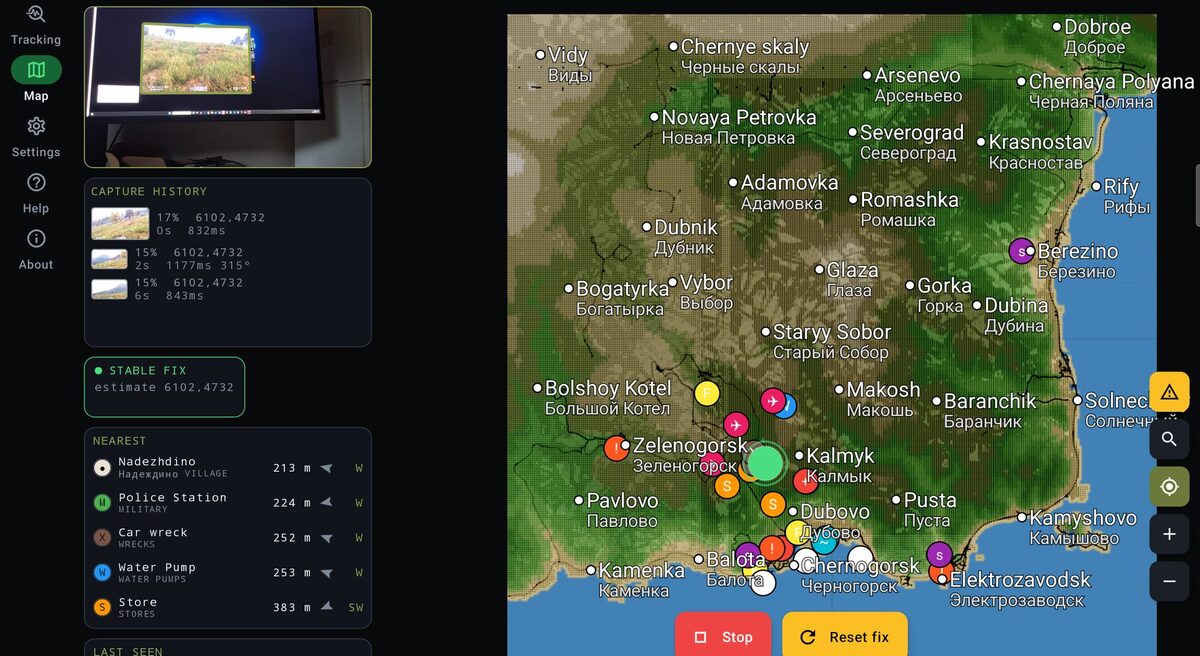 ZLocatorWhere are you in DayZ? Your phone camera reads the game screen and shows your position on the map.Learn more
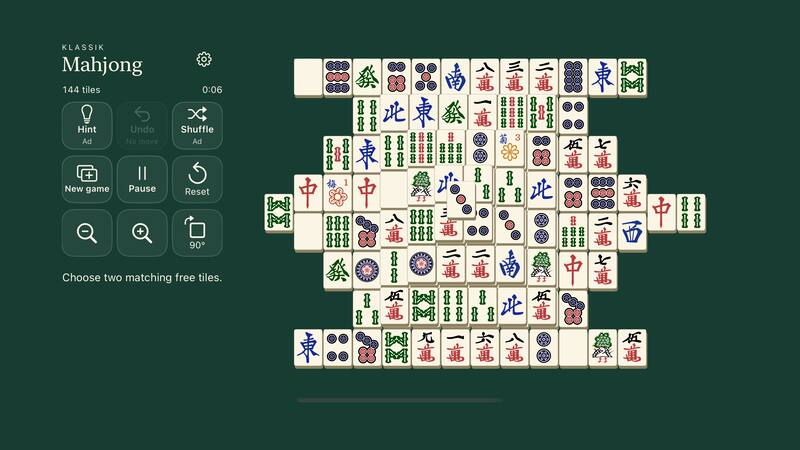 Klassik MahjongTraditional mahjong solitaire, 144 tiles. Free on Android and iPhone.Learn more
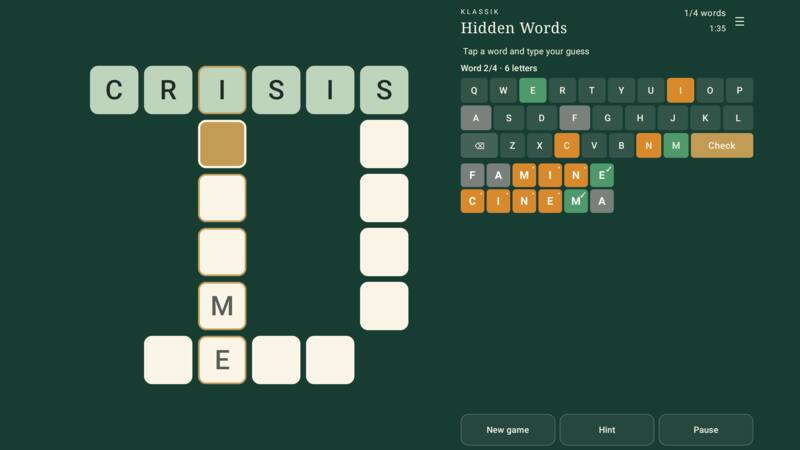 Klassik SanahakuTwo word games and a daily puzzle. Free on Android and iPhone.Learn more